Commercial procurement guide · Substantially updated 2026-10-12
Start With the Route, Not the Lift Kit
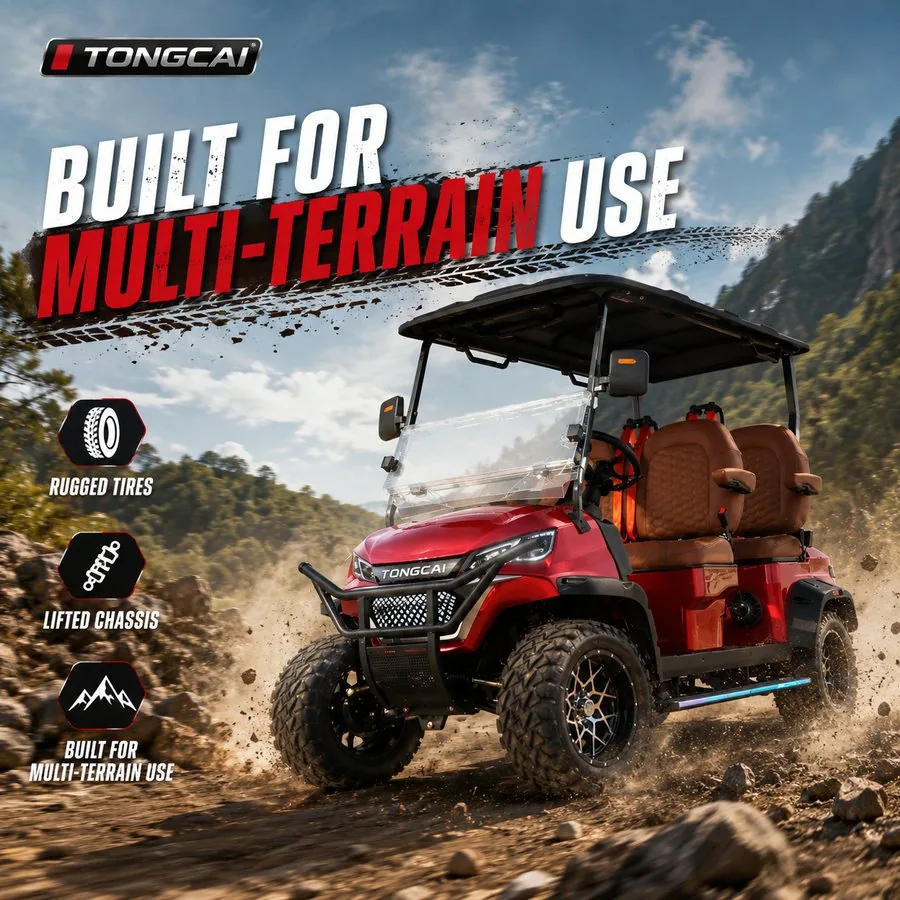
Commercial buyers need repeatable transport, not a visual modification in isolation. Extra ride height, different tyres and a revised suspension can affect the vehicle envelope, boarding, steering feel, braking demand, transport dimensions and service parts. Define the operating route and duty cycle before requesting a configuration.
Separate must-have route needs from appearance preferences. A recurring drainage channel, uneven shoulder or farm track may justify a clearance review. A colour, wheel style or stance preference belongs in the written customization brief, where it can be approved without replacing the route and safety assessment.
1. Measure Obstacles, Grades and Surfaces
Walk or drive the intended route with the people responsible for operations and safety. Record ruts, roots, track edges, ramps, drainage channels, loose gravel, wet grass, sand, mud and transitions between surfaces. Photograph recurring obstacles with a scale reference and note whether the cart must cross, follow or turn beside them.
Measure the steepest sustained grade and any short ramp. Also record where the loaded cart must start, stop or turn on a grade. Identify side slopes, crowned roads and off-camber turns separately. Send the route condition, expected load and operating policy to the supplier; request written model-specific limits rather than applying a generic hill or clearance claim.
2. Check the Complete Vehicle Envelope
Measure the narrowest gate, path, bridge, parking bay and loading door, plus the lowest roof, branch or storage clearance. Include mirrors, roof, lights, tyres, rear seat or cargo body in the operating envelope. Packed dimensions may differ, so confirm the shipping envelope separately.
Map the tightest turn, reversing space and passing points. Identify a recovery location where a disabled cart can be isolated without blocking guests, workers or emergency access. The route should have an operating rule for sections where vehicles cannot safely meet or turn around.
3. Define Load, Boarding and Duty Cycle
Record passengers, luggage, tools or cargo for the heaviest normal trip. Include boarding frequency, steps, handholds and access needs for guests, older passengers, children or workers carrying equipment. A higher entry can create an operating problem even when clearance improves.
Provide route length, trips per shift, operating hours, idle periods, temperature, storage and the actual charging window. Compare the battery and charging plan as part of the whole vehicle. The lithium versus lead-acid guide explains the operating questions to document; final capacity, range and charging time still require the written configuration and route assumptions.
4. Request a Comparable Complete-Vehicle Proposal
Ask each supplier to return the same fields so quotations can be compared on scope. Do not accept a wheel or lift description as a complete answer.
| Buyer input | Supplier confirmation to request |
|---|---|
| Obstacles, grades, cross-slopes and surfaces | Applicable model, complete configuration, written limits, assumptions and route exclusions |
| Passengers, cargo and boarding needs | Approved load basis, seating or body layout, access features and operating restrictions |
| Turns, gates and overhead limits | Final operating dimensions, tyre/wheel envelope, turning information and clearance points |
| Trips, hours and charging window | Battery, charger and drive-system proposal tied to stated duty-cycle assumptions |
| Destination and operating area | Available documentation and items the buyer must verify with local authorities |
| Service and downtime plan | Model/revision-specific manuals, inspection points, parts references and escalation process |
Availability, performance, documentation and support vary by final model, market and contract. Confirm the signed configuration and its assumptions before ordering.
5. Turn the Route Brief Into Acceptance Evidence
Use a representative route, trained operator and agreed load for a controlled evaluation when practical. Define the safe test method from the final vehicle documentation and qualified site review. Record the route, weather, load, battery state, operator, stops and exceptions so the result can be interpreted.
At minimum, the plan should address low-speed straight tracking, full-lock turns, tyre and body clearance, service and parking brake operation, controlled starts and stops on the relevant grade, unusual noise, steering interference and charging assumptions. Connect these items to the pre-shipment inspection checklist so factory evidence and site acceptance use the same approved configuration.
6. Lock Configuration, Packing and Support
Freeze the suspension, steering, brake, wheel, tyre, motor, controller, battery, charger, body and accessory revision in writing. Record who approves changes and which evidence is required before shipment. Ask for the final parts references, manuals and service information appropriate to the agreed support scope.
Confirm operating and packed dimensions, removed parts, protection, securing points, unloading constraints and destination reassembly. Use the container loading and packing checklist to connect the approved vehicle to shipment evidence, then use the delivery inspection and claim checklist to reconcile serials, configuration and exceptions on arrival.
Copyable Lifted-Cart Route Brief
- Route purpose and permitted operating area
- Surface types and recurring obstacles with measurements
- Steepest sustained grade and short ramp locations
- Cross-slope, crowned-road and off-camber sections
- Narrowest path, gate, parking and loading-door width
- Lowest overhead and storage clearance
- Tightest turn, reversing area and recovery point
- Passengers, boarding needs, luggage or cargo per trip
- Trips per shift, operating hours and speed policy
- Charging window, destination power and storage conditions
- Temperature, rain, drainage, dust and other site conditions
- Required inspection, pilot, manuals and parts support
- Packed dimensions, delivery point and unloading constraints
- Local compliance questions for the relevant authority
Review Public Models, Then Confirm the Final Build
Buyers can review the E Upgraded Model, J Series and K Model as public starting points. A page image or family name does not confirm that a particular lifted configuration is available or suitable. Send the route brief and request the complete proposed specification, assumptions, exclusions and revision in the quotation and contract.